14 October 2026
What my own mental health journey has taught me about the groups we fund: Kirsty's story
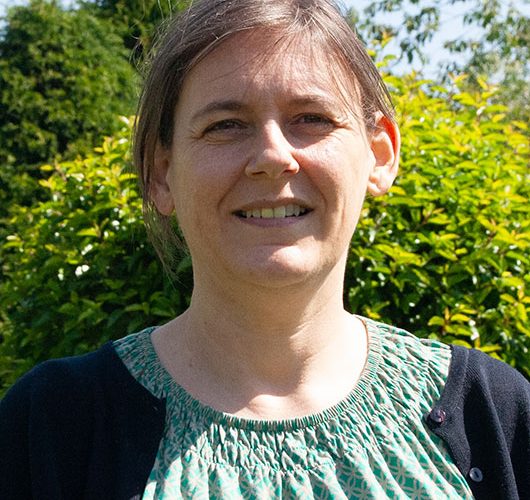
For Mental Health Awareness Week, Kirsty Campbell, our Senior Programmes Manager, shares her own experience of mental health and what it’s taught her about the groups we fund.
I’ve always lived with anxiety, along with fairly frequent periods of depression (some more significant than others). One of my earliest memories of anxiety is from around age 6 or 7, when I kept crying at school for no apparent reason, even though I had the loveliest teacher. I knew I was worried but couldn’t explain why. School suggested I stay home for a while (there was no pressure on parents then like there is now, plus I had a stay-at-home parent, so there were no childcare concerns). That mental health break helped.
Fast forward 20-odd years and I’m filling in post-natal depression questionnaires, indicating I was struggling but denying it. I’d say I’m fine, naturally anxious, no action needed. What made a difference was finding connections and somewhere I felt I belonged after moving to Somerset.
It comes down to people
Since then, I’ve experienced work-related mental health problems and supported my family with their challenges. That’s ranged from my husband’s stress in demanding frontline policing roles (and his own battles acknowledging that) to my 3 children experiencing severe mental health crises, and all being neurodivergent in a world not made for them. As a parent, their distress and pain stays with you. Mental health support didn’t help my eldest. Time out and finding her own way in life has. But we could support her with that when many families can’t.
For my younger 2 children, time and having adults who listen and really understand them has helped. They both still struggle hugely with anxiety, in particular social anxiety, along with chronic fatigue. I’ve realised that the progress they’ve made comes down to people and building safe relationships. That includes CAMHS (Child and Adolescent Mental Health Services) workers who really understood my children’s needs (Alex in particular, you’re amazing!). They’re both now lucky to have Education Other Than at School (EOTAS) packages, and it’s the voluntary sector providers and individuals who are making a difference. They give my children safe spaces where they can be themselves and start sharing their voice. But it’s been, and still is, a slow journey.
Domains of resilience
I recently joined an online webinar from the Charlie Waller Trust on resilience for young people, although what they shared is helpful at any age. They defined resilience as the skills or inner resources to handle stress, adversity and trauma without being overwhelmed. They mentioned 6 “domains of resilience”, which I interpret as a secure base, friendships, positive values, education, interests and social connection.
I’m privileged to see many of the grant applications we receive at Somerset Community Foundation. They come from a large variety of voluntary sector organisations supporting communities in very different ways. But they share an underlying drive to connect people, and all fit into a domain of resilience. Many resonate with my own personal experiences: parent and toddler groups, groups supporting young people not in education, employment or training, groups supporting families of children with special educational needs and disabilities, adult mental health support, and those that make life better, like sports clubs, choirs, friendship groups, talking cafes and many more.
A young person trying to be her true self
I didn’t want to finish without turning to the particular mental health challenges facing the trans community. My youngest daughter is a trans young person who is trying to be her true self. This is made much harder by the restrictions on, and in places complete lack of, gender care, the constant negative messaging in the media and the hostile environment that helps to perpetuate. I see the distress of gender dysphoria day in, day out. The impact is massive: on self-care, on physical health (including dehydration due to toilet avoidance), on mental health and even on just being able to leave the house. TransActual has a full list of videos and podcasts on its website, including a short film giving a firsthand perspective on growing up trans.
Thinking about our Eagle House Trust university bursaries for care leavers, it’s heartbreaking to read applications from trans young people whose families have chosen not to know them. What struck me in the feedback from recent Eagle House Trust bursary graduates was that they highlighted the groups they joined and the friends they made, rather than what they’d learned academically. I had the sense they’d found somewhere they belonged. I hope every young person who applies finds their place to belong too.
In our corner
I’m part of an LGBT parent and carer support group. In fact, all the parents and carers there have a trans, non-binary or questioning young person, although it’s open to any LGBT parent or carer. We’re all hugely worried about our children and their future. I can only hope the current rhetoric will change. But I’m also glad there are voluntary sector organisations in our corner, and I think there’s a will in the voluntary sector to remain inclusive and to keep doing what it does: connecting people and helping to support resilience.
If Kirsty’s story has struck a chord, you can help more people in Somerset find the support and connection they need. Our Somerset Wellbeing Fund pools donations to fund local mental health and wellbeing charities, so every gift goes further.
Support local giving
Give through SCF and your money stays in Somerset – funding the quiet, essential work communities depend on.